Weekend Special - Champion of the Week
Champion of the Week: Five Weekday Winners, One Crown
A space-proof bug, a deathless sausage, a tongue thief, a highway-slimer, and a butt-cannon beetle walk into a Saturday. Only one is Critter of the Week.
By someone who loves to compare irrelevant things · 6 min read

🐻Tardigrade (Water Bear)
Milnesium tardigradum
Reigning Monday champ, here to remind everyone it survived the vacuum of space.
- CoolSpace survival: 10 days in open orbit, lived
- WeirdOff switch: Dries into a 'tun', metabolism near zero
- GrossFace hardware: Mineral stylets to stab and slurp cells

🦷Naked Mole-Rat
Heterocephalus glaber
The unkillable wrinkly sausage, returning to defend its title from a folding chair.
- CoolAging: Defies the Gompertz law, 30+ year lifespan
- WeirdNo-oxygen mode: ~18 min anaerobic, runs on fructose
- GrossDental layout: Front teeth sit OUTSIDE the lips
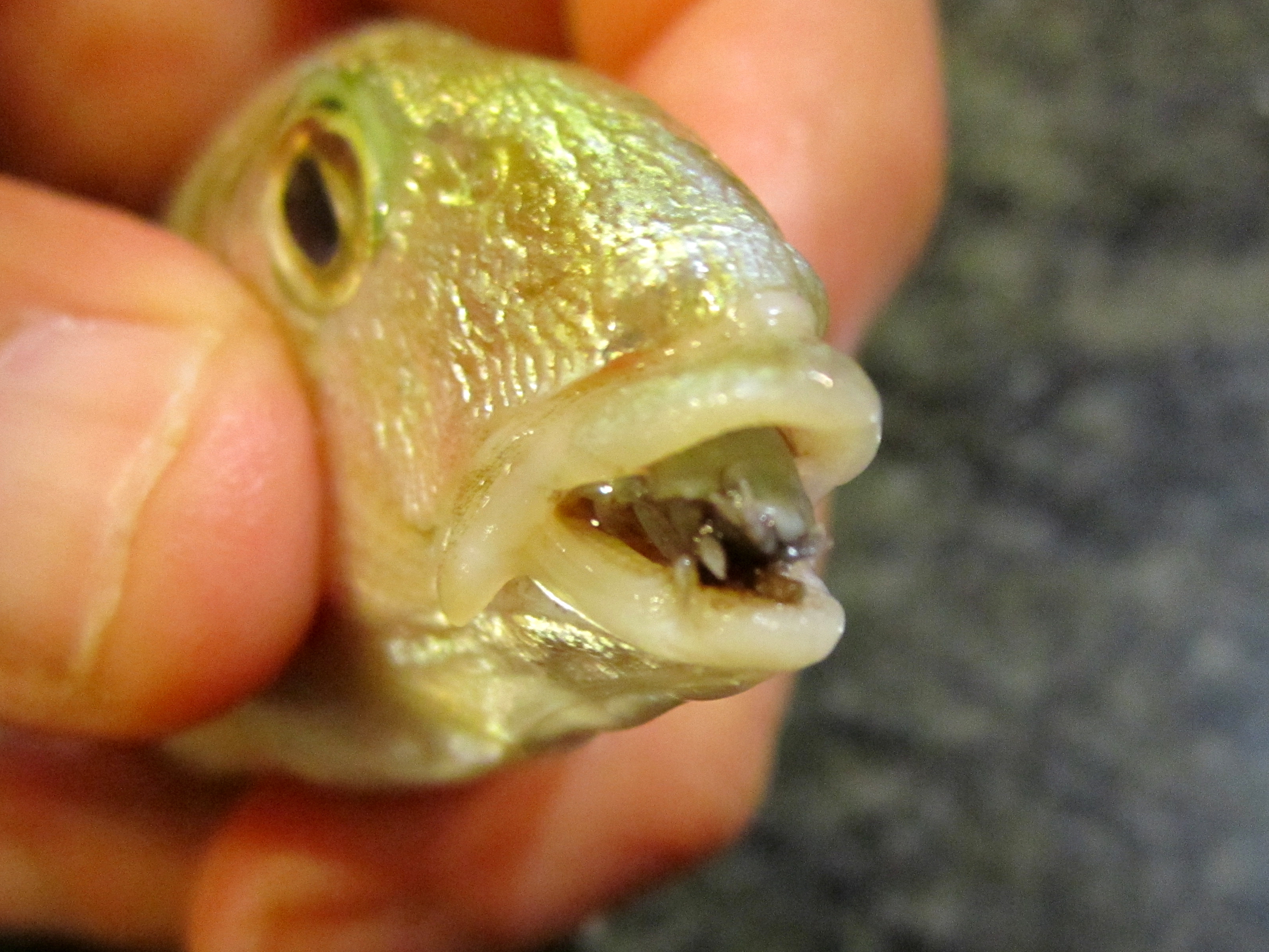
🦐Tongue-Eating Louse
Cymothoa exigua
Wednesday's winner, and the only contestant currently employed as somebody's tongue.
- CoolCareer move: Only parasite known to replace a host organ
- WeirdLife plan: Born male, becomes female, retires in a mouth
- GrossWhat it is: A living tongue made of crustacean

🐟Pacific Hagfish
Eptatretus stoutii
Thursday's slime champion, who once helped close an Oregon highway.
- CoolKnot trick: Ties itself in a knot for leverage
- WeirdSpine count: Has a skull but no vertebrae
- GrossSlime output: Goo expands up to 10,000x in seconds
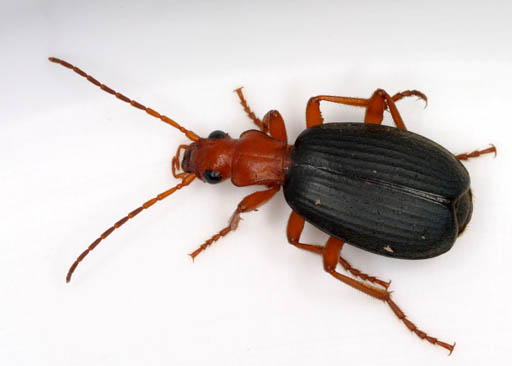
🪲Bombardier Beetle
Brachinus sp.
Friday's winner, armed and legally questionable in several states.
- CoolFire rate: Pulsed blasts up to ~500 per second
- WeirdEscape act: Survives being swallowed, exits via toad vomit
- GrossAmmo: Near-boiling caustic spray from the abdomen
It is Saturday, which on this blog means the bouncer steps aside and only the champions get in. All week long I pitted random animals against each other and crowned five weekday winners: a bug that shrugged off outer space, a wrinkly sausage that refuses to die, a crustacean that becomes your tongue, an eel that drowns highways in snot, and a beetle that fires boiling chemical artillery out of its butt. Now they are all in one room. One leaves with the crown of Critter of the Week. The other four have to share a single rented van back to the void. Let's judge them on the only three things that matter: how cool, how weird, and how gross.
The bracket, recapped for people who skipped class
Five winners walk in. Here is the resume each of them slapped on my desk.
Tardigrade: the one that survived space and then complained about the sun
In September 2007 the European Space Agency strapped desiccated tardigrades to the outside of a spacecraft and exposed them to the raw vacuum of low Earth orbit for ten days. Many came back fine. Some even survived direct, unfiltered solar UV, then rehydrated and had babies like nothing happened. Space could not kill them. The sun nearly did, which is the most relatable thing a creature has ever done.
Cool: first animal proven to survive vacuum, cosmic radiation, and solar UV at the same time. Weird: when it dries out it shrivels into a barrel called a "tun" and basically switches its metabolism off. Gross: up close it is a plump eight-legged gummy bear that stabs algae with mineral spears in its face and slurps the juice. About 1,000 cells, zero chill.
Naked Mole-Rat: the immortal hot dog that runs on plant fuel
This thing breaks the rules of being a mammal. It is eusocial like an ant colony, ruled by one aggressive queen. It almost never gets cancer thanks to a long, gloopy sugar in its tissue. It can survive roughly 18 minutes with NO oxygen by switching to fructose metabolism, like a houseplant having a panic attack. And it defies the Gompertz law of aging, meaning its risk of death does not climb as it gets older. Records pass 30 years.
Cool: a mammal that does not really age and laughs at cancer. Weird: it is a thermoconformer, basically room temperature, more reptile than rodent. Gross: its front teeth are OUTSIDE its lips so it can dig with its mouth closed, and it looks like a sock someone already used.
Tongue-Eating Louse: the only animal that applied for a job as an organ
A juvenile sneaks in through a fish's gills, crawls to the mouth, and uses hooked legs to cut the blood supply to the tongue. The tongue withers and falls off. Then, and this is the part that should be illegal, the louse latches onto the stump and serves as the fish's functional replacement tongue for the rest of its life. It is believed to be the only known parasite that functionally replaces a host organ. It also starts life male and becomes female later. It is not even an insect; it is an isopod, a cousin of the pillbug.
Cool: the engineering audacity of replacing an organ you ate. Weird: born male, retires female, lives in a mouth. Gross: it is, and I cannot stress this enough, a living tongue made of crustacean.
Pacific Hagfish: the one that turned a real highway into a slip-n-slide
Hagfish slime is about 99.996 percent seawater. The gland goo hits the ocean and expands up to 10,000 times in under half a second, the most dilute hydrogel known to science. In July 2017 a truck hauling 7,500 pounds of live Pacific hagfish crashed on an Oregon highway, the stressed fish unloaded, and crews used a bulldozer and firehoses to clear the slime off the road and at least one very unlucky Nissan. The hagfish itself has no jaws, no vertebrae, a skull but no spine, multiple hearts (commonly cited as four, sometimes five), and eats carcasses from the inside out.
Cool: can tie its own body into a knot and slide the knot down itself for leverage. Weird: a vertebrate that forgot to bring a spine. Gross: defense mechanism is "produce enough snot to total a sedan."
Bombardier Beetle: a butt that does artillery at 500 rounds per second
The beetle mixes hydroquinones and hydrogen peroxide with the enzymes catalase and peroxidase in a reinforced reaction chamber. The result is a near-boiling, roughly 100 degrees C spray of caustic benzoquinone, fired out the abdomen. A 2015 MIT and Brookhaven team used synchrotron X-rays at 2,000 frames per second to film inside live beetles and found the spray is not a stream but a machine-gun pulse, up to about 500 explosions per second, with a passive valve snapping shut and reopening each blast. It aims through nearly 270 degrees. In a 2018 study, swallowed beetles detonated inside toads and 43 percent of the toads vomited them back up, alive, up to an hour and 47 minutes later.
Cool: controlled internal explosions, automatically, without firing a nerve per shot. Weird: survives being eaten and walks away from a toad's stomach. Gross: the whole apparatus is a chemical weapons facility in a beetle's rear end.
How I scored the final
Coolness is a five-way tie, honestly. Surviving space, not aging, organ theft, snot-flooding a highway, and butt artillery are all S-tier on the cool axis. So coolness cancels out and we go to the tiebreakers: weird and gross. And on those two axes, four of these legends did something incredible to the world or to themselves. Only one did something incredible to someone ELSE, permanently, and is still doing it right now inside a fish that did not consent.
And the winner is...
🦐 Tongue-Eating Louse
Critter of the Week: the Tongue-Eating Louse.
Surviving space is a flex. Refusing to age is a flex. Drowning a highway in slime is, frankly, a personality. But every other champion this week is impressive at being itself. The tongue-eating louse is impressive at being SOMEONE ELSE. It found a fish, evicted an organ, and then took the organ's job, salary, and parking spot for life. No other animal on this list can claim a permanent residence inside a living creature where a body part used to be.
The tardigrade wins "most likely to outlive us all." The naked mole-rat wins "most likely to be in a lab paper next week." The hagfish wins "worst commute." The bombardier beetle wins "most likely to be classified as a munition." But the crown goes to the louse, because cool fades, weird is fun, and gross is forever, and a crustacean cosplaying as your tongue is the single most forever thing I covered all week. You know what they say: it is not whether you win, it is whether you become part of the loser.
You be the judge
Who is your pick?
Vote before you scroll on. No wrong answers (there is one wrong answer).
Questions you're too polite to ask
- Is the Champion of the Week a fair fight if they never actually meet?
- No, and that is the point. They cannot share a habitat, a temperature, or in some cases a phylum's worth of dignity. I judge them on cool, weird, and gross from a safe distance, which is the only responsible way to referee a beetle that shoots boiling acid at a tongue made of crustacean.
- Did the tongue-eating louse really earn it over the tardigrade?
- Yes. The tardigrade is the better survivor and the cooler science headline. But this crown weighs weird and gross when cool ties, and 'permanently becomes a fish's tongue' beats 'naps in a vacuum' on both. The tardigrade survived space. The louse colonized a face. Different leagues.
- Are any of these animals dangerous to me, a human?
- Barely. The tongue-eating louse ignores humans entirely, though a live one can nip your finger. The bombardier beetle's spray stings but will not seriously hurt you. The hagfish will only ruin your day if you are driving behind a truck full of them on Oregon Highway 101 in July 2017, which, statistically, you were not.
Taxonomy & tags
Where the facts came from
- Tardigrades survived exposure to space in low Earth orbit - Current Biology / Cell
- Naked mole-rats can survive 18 minutes without oxygen - Science (AAAS)
- Naked mole-rats defy the biological law of aging - eLife / NIH PMC
- Fish tongue biters: more than just one of a kind - Australian Museum
- How much slime can a hagfish make? - Natural History Museum, London
- Slime eels close down an Oregon highway - CNN
- How bombardier beetles produce a defensive spray - MIT News
- Bombardier beetles escape alive from toad stomachs - Biology Letters / NIH PMC
The peanut gallery
0 comments