13 weeks ago · The daily matchup
Maned Wolf vs Blackfin Icefish vs Honeypot Ant vs Southern Cassowary: A Fox on Stilts That Pees Weed, a Fish With Clear Blood, a Living Honey Balloon, and a Bird That Kicks Like a Velociraptor
One grassland stilt-dog, one Antarctic ghost fish, one ant that turned itself into a snack jar, and one bird that files taxes as a war crime. Only one gets the crown.
By someone who loves to compare irrelevant things · 6 min read

🐺Maned Wolf
Chrysocyon brachyurus
A red fox that took out a loan and bought stilts, then peed on the receipt.
- CoolHeight at shoulder: Up to ~1 m, tallest wild canid
- WeirdActually a wolf?: No. Only member of genus Chrysocyon
- GrossUrine bouquet: Skunk / cannabis (2,5-dimethylpyrazine)
- GrossSignature move: Poops on ant nests to plant wolf apples

🐟Antarctic Blackfin Icefish
Chaenocephalus aceratus
The only vertebrate that looked at having blood and said no thank you.
- WeirdBlood color: Clear, no hemoglobin, white gills
- CoolAntifreeze: Glycoproteins that block ice crystals at -1.8 C
- CoolHeart: Enlarged, huge stroke volume to move watery blood
- WeirdOxygen capacity: About 10% of a normal fish
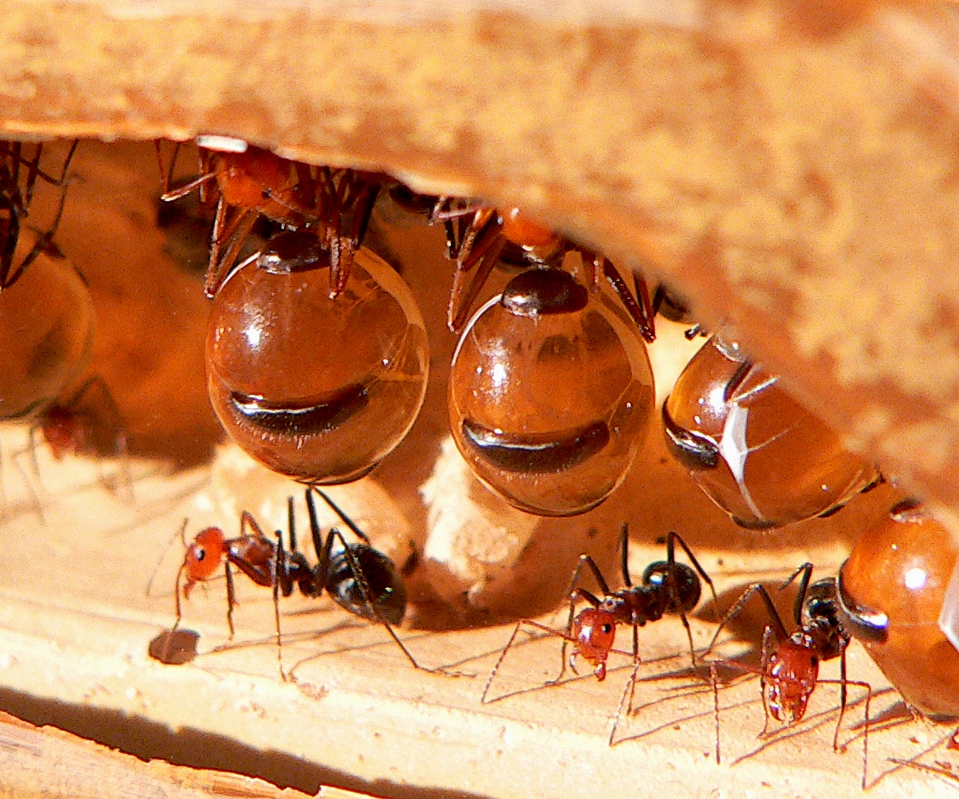
🐜Honeypot Ant
Myrmecocystus mexicanus
Volunteered to become a grape-sized jar and hang from the ceiling. On purpose.
- WeirdReplete abdomen: Swells 4-5x to grape size, goes translucent
- WeirdJob description: Hangs from nest ceiling as a living pantry
- GrossDispensing method: Barfs stored honey when antennae are stroked
- GrossFate: Eaten by people as a sweet treat

🦅Southern Cassowary
Casuarius casuarius
A velociraptor that survived, learned to eat fruit, and kept the dagger.
- CoolReputation: Widely called the most dangerous bird alive
- CoolInner-toe claw: Dagger up to ~10-12 cm, kicks downward
- WeirdCasque: Bony helmet that works as a thermal window
- WeirdDad duty: Male alone incubates the bright green eggs
Welcome back to the internet's only blog reckless enough to put a fox on stilts, a fish with see-through blood, an ant that volunteered to become a grape, and a bird that can legally be described as a knife with feet into the same ring and demand they explain themselves. Today's lineup is aggressively random and I am not sorry. We have a mammal from the Brazilian grasslands, a fish from water so cold it should not be legal, an insect that reinvented itself as a pantry, and a bird whose entire personality is the phrase "do not approach." I judged all four on the only three metrics that matter here: how cool, how weird, and how gross. Let's ruin some dinner conversations.
The lineup, briefly, before someone gets hurt
Four animals. Four completely different corners of the tree of life. Zero shared hobbies. The maned wolf and the cassowary have never met the icefish and the ant, and after reading this you will understand that this is for everyone's safety.
Cool
Southern cassowary walks in and immediately wins the room. It is a flightless ratite, one of the heaviest birds alive, standing up to about 1.7 m tall, and it is widely called the most dangerous bird in the world. The inner toe on each foot carries a dagger-like claw up to roughly 10 to 12 cm long, and a threatened bird leaps and rakes downward with it. It is, functionally, a velociraptor that survived and now lives in Australian rainforests eating fruit. It is also a keystone seed disperser, so the murder-bird is secretly a gardener.
Maned wolf counters with elegance. It is the tallest wild canid, standing up to around 1 m at the shoulder, with absurd black stocking legs built for peering over tall grass. It looks like a red fox got a bank loan and bought stilts. Despite the name and the look it is neither a true wolf nor a fox; it is the only member of its own genus, Chrysocyon, a species so distinct it refuses to be categorized by vibes alone.
Blackfin icefish brings the coolest trick, literally. It survives in Southern Ocean water hovering near minus 1.8 C by pumping antifreeze glycoproteins through its body that latch onto baby ice crystals and stop them from growing. It is a living organism that decided freezing was optional.
Weird
And here the blackfin icefish takes over completely. It is the only known vertebrate that lives its adult life with no hemoglobin. No red blood cells to speak of, no red pigment, nothing. Its blood is clear. Its gills are creamy white. In most crocodile icefishes the gene for the hemoglobin beta-subunit has been straight up deleted from the genome. To move oxygen around anyway it runs an enormous hypertrophied heart, several times the stroke volume of a normal fish, and carries a huge volume of thin, watery blood. It is a fish that failed the most basic vertebrate exam and just... found another way.
The honeypot ant is weird in a more architectural sense. Certain workers, called repletes, gorge on nectar until their abdomens swell four to five times normal size, ballooning up to grape-sized and going translucent amber. Then they climb to the ceiling of the underground nest, hang there, and become the colony's living pantry. When a nestmate is hungry it strokes the replete's antennae and the replete throws up storage honey on command. This is not a metaphor. The ant is the jar.
Gross
Maned wolf, your table is ready. Its urine is famous for smelling powerfully of skunk, hops, or straight-up cannabis, thanks to a compound called 2,5-dimethylpyrazine that it uses as a chemical keep-out sign. Zoos have genuinely had visitors report a marijuana smell, only for staff to explain that no, that is just the dog's territorial pee. To seal the deal, its favorite food is the tomato-like wolf apple, and it likes to defecate on leafcutter ant nests, which helpfully fertilizes and germinates the seeds. It is a landscaper whose only tools are weed-scented urine and strategic pooping.
The honeypot ant clocks in on the gross scale purely because the payoff to all that living-jar engineering is that people eat them. The swollen repletes of the American Myrmecocystus were a delicacy for Native American peoples, and separate Australian honeypot ants in other genera are an occasional treat for Indigenous Australians. You bite the abdomen, you get a pop of honey. The ant spent its whole life becoming a snack and then delivered.
The cassowary stays mostly clean here, unless you count the part where it can open you up with one kick. We are counting that a little.
So who actually wins
The cassowary is the coolest. The maned wolf is the grossest and smells like a college dorm. The honeypot ant is the most horrifyingly efficient. But you know what they say: you can respect a knife-footed dinosaur bird, but you cannot beat a fish that looked at having blood and said no thank you.
And the winner is...
🐟 Antarctic Blackfin Icefish
The blackfin icefish wins because it is the single strangest body in this whole freak parade. Being the only vertebrate that lives with no hemoglobin and clear blood is not a quirk, it is a violation of the entire vertebrate rulebook, and it pulled it off by growing a monster heart and pumping antifreeze through translucent veins in water that would kill almost anything else. The cassowary is scarier, the maned wolf is smellier, and the honeypot ant is more edible, but none of them rewrote what it means to be an animal. Clear blood beats a dagger foot. Ghost fish takes the crown.
You be the judge
Who is your pick?
Vote before you scroll on. No wrong answers (there is one wrong answer).
Questions you're too polite to ask
- Does maned wolf pee really smell like cannabis?
- Yes. The odor comes largely from 2,5-dimethylpyrazine, and it reads to human noses as skunk, hops, or marijuana. Zoos have fielded actual complaints about a weed smell that turned out to be the maned wolf marking its territory. Nature's least convincing alibi.
- How does the icefish survive with no hemoglobin?
- It cheats with plumbing. Cold water holds a lot of dissolved oxygen, and the icefish carries a large volume of thin, watery blood moved by an oversized, hypertrophied heart, plus thin vascular skin. Its oxygen-carrying capacity is only about a tenth of a normal fish, so it basically lives on a razor-thin margin in freezing water and somehow makes it work.
- Is the cassowary actually the most dangerous bird?
- It has the reputation for good reason. It is a large flightless ratite with a dagger-like inner claw up to roughly 10 to 12 cm, and when cornered it kicks and rakes downward. Attacks on humans are rare and usually tied to people feeding them, but the hardware is genuinely capable of causing serious injury.
- People eat honeypot ants?
- They do. The swollen, honey-filled repletes are sweet, and both Native American peoples (with the genus Myrmecocystus) and Indigenous Australians (with different honeypot ant genera) have long harvested them as a natural candy. You are eating the ant's abdomen straight off the nest ceiling.
Taxonomy & tags
Where the facts came from
- Maned wolf - Wikipedia
- Maned Wolf - Smithsonian's National Zoo and Conservation Biology Institute
- The mystery of the maned wolf's marijuana-smelling pee - National Geographic
- Channichthyidae (crocodile icefishes) - Wikipedia
- Blackfin icefish - Wikipedia
- The genome of the Antarctic blackfin icefish (Kim et al. 2019) - Nature Ecology and Evolution (PubMed Central)
- Honeypot ant - Wikipedia
- Myrmecocystus mexicanus - Wikipedia
- Honeypot Ant Fact Sheet - San Diego Zoo Wildlife Alliance
- Cassowary - San Diego Zoo Wildlife Alliance
- Southern cassowary - Wikipedia
- Cassowary casques act as thermal windows (Eastick et al. 2019) - Scientific Reports (Nature Portfolio)
The peanut gallery
0 comments