13 weeks ago · The daily matchup
Tardigrade vs Sea Pig vs Superb Lyrebird: A Bug That Survived Space, a Pig That Walks on the Sea Floor, and a Bird That Does a Chainsaw Impression
Three animals from three completely unrelated corners of existence, judged on cool, weird, and gross, because consistency is for cowards.
By someone who loves to compare irrelevant things · 5 min read
 👑 Winner
🐻Tardigrade (Water Bear)
Milnesium tardigradum
The half-millimeter immortal who treats the vacuum of space as a light nap.
- CoolSpace survival: 10 days in open vacuum, survived
- CoolTemperature range: near -273 C to about 151 C
- GrossFeeding method: stabs cells with stylets, drinks the insides
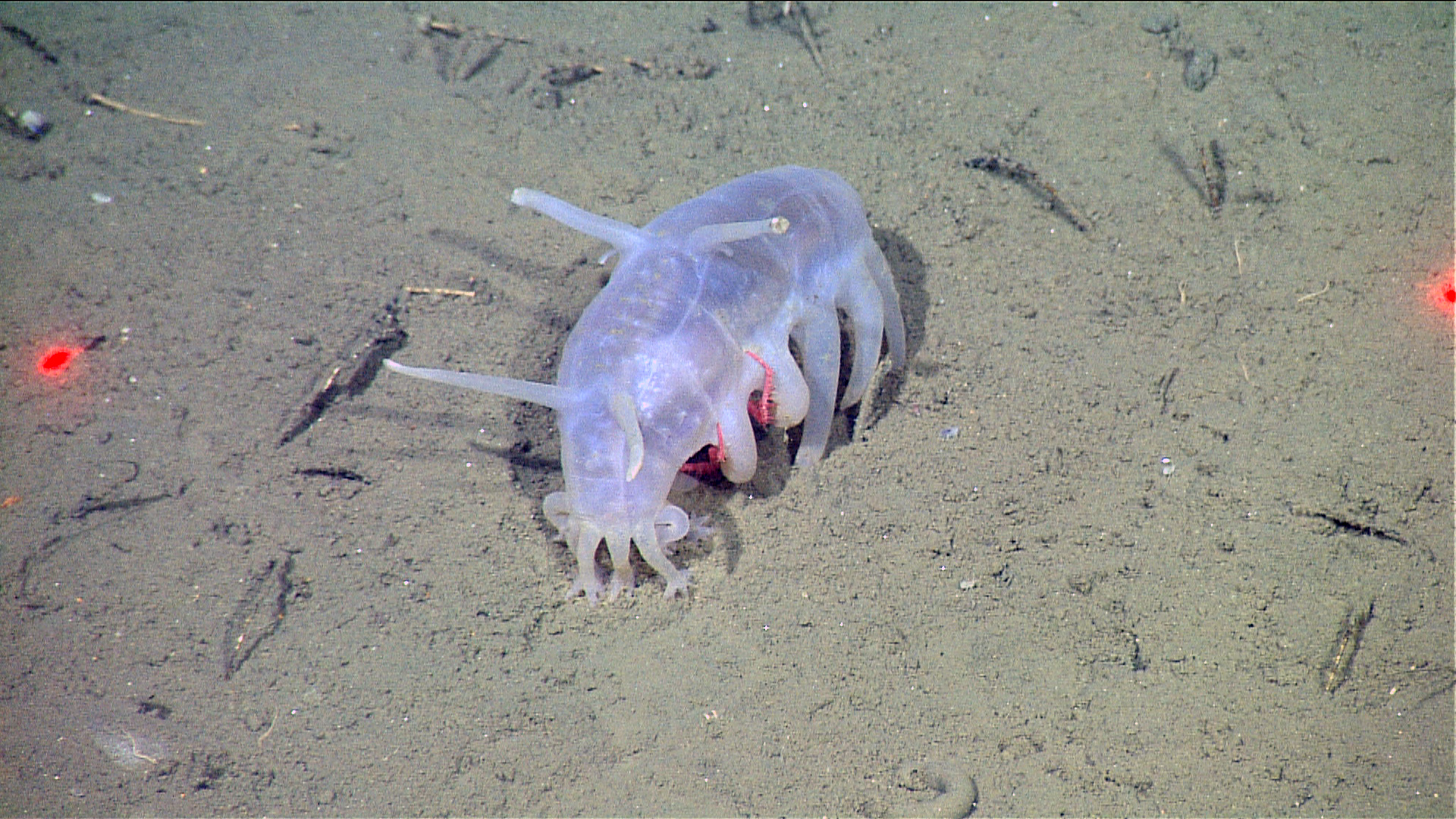
🐷Sea Pig
Scotoplanes globosa
A pink abyssal blob that walks on hydraulic legs and breathes through its rear.
- CoolDepth range: about 1,000 to 6,000 m down
- WeirdHitchhikers: baby king crabs cling to its belly
- GrossRespiration: breathes through its anus

🪶Superb Lyrebird
Menura novaehollandiae
A giant songbird, expert mimic, and accidental forest-floor farmer.
- CoolSong mimicry: about 80% of song imitates other sounds
- WeirdForest farming: moves ~155 tonnes of litter per hectare per year
- WeirdMating trick: fakes a whole mobbing flock to deceive females
Some days I sit down to write and the universe hands me a clean theme. This is not one of those days. Today I have a half-millimeter water bear that shrugged off the open vacuum of space, a soft pink sea cucumber that struts across the abyss on hydraulic stilts while a crab clings to its belly, and an Australian songbird that can do a startlingly good impression of a chainsaw. They share nothing. No habitat, no body plan, not even the same kingdom of weirdness. That is exactly why they are here. I judge animals on three things and three things only: how cool, how weird, and how gross. Let the chaos begin.
Meet the unrelated contestants
We have a tardigrade (phylum Tardigrada, the famous moss piglet), a sea pig (Scotoplanes globosa, a deep-sea sea cucumber), and a superb lyrebird (Menura novaehollandiae, one of the largest songbirds on Earth). A microscopic extremophile, a 6,000-meter-deep mud-snuffler, and a forest performance artist. If you put all three in the same room, two of them would die instantly and the third would mimic the sound of the other two dying.
Cool
The tardigrade is, frankly, showing off. In September 2007, dried tardigrades rode ESA's FOTON-M3 mission and were exposed to the open vacuum of space for about ten days. Most survived. Some even survived the added direct hit of solar UV, making them the first animals ever shown to survive open space. They pull this off with a tun state called cryptobiosis, in which they dehydrate, shut down their metabolism to almost nothing, and wait. In that state they have endured temperatures from near absolute zero (about -273 C) up to roughly 151 C. They also carry a unique protein called Dsup that shields their DNA, and when scientists put Dsup into human cells it cut X-ray DNA damage by roughly half.
The sea pig is cool in a quieter, stranger way. It walks. Most sea cucumbers slump; Scotoplanes lifts its soft body off the mud on long, stilt-like tube feet, which are hydraulic legs run by its water vascular system. It strolls the abyssal plain in herds, often all facing the same direction into the current, like the world's most relaxed flash mob.
The lyrebird is cool in the way a virtuoso is cool. The male builds display mounds, throws his lyre-shaped tail forward over his whole body, and performs. Roughly 80% of his song is mimicry. And a 2021 study found males will construct an entire acoustic illusion of a panicking, mobbing flock of alarm-calling birds, wingbeats included, specifically when a female tries to leave without mating. That is not a party trick. That is psychological warfare set to birdsong.
Weird
The sea pig runs away with weird here, mostly because of its passengers. Juvenile king crabs, found on roughly a fifth of observed individuals, hitchhike on the undersides of sea pigs, apparently sheltering there, and marine biologists at MBARI still are not entirely sure what the sea pig gets out of the deal. So picture it: a translucent pink blob the size of a fist, walking through eternal darkness at three kilometers down, with a baby crab strapped to its belly like a tiny anxious commuter.
The lyrebird's weird is that it has quietly become a farmer. A 2-year study found these birds rake and till the forest floor so aggressively that they move on the order of 155 tonnes of litter and soil per hectare per year, loosening the ground and boosting the invertebrate prey they then eat. They are ecosystem engineers who garden the bugs they want to eat. The tardigrade, meanwhile, may currently be sprinkled across the surface of the Moon: in 2019 the Beresheet lander crashed carrying thousands of dehydrated tardigrades, and whether any survived is genuinely unresolved (later impact tests put the survival cutoff uncomfortably close to the crash speed).
Gross
This is the sea pig's category and it knows it. Like all sea cucumbers, it breathes through its anus, drawing water into branching respiratory trees inside its cloaca to pull out oxygen, then pushing the water back out. It also finds food by smell and snuffles through deep-sea mud for marine snow and the occasional whale carcass with mucus-covered sensory tentacles. The tardigrade is less gross but not innocent: it feeds by stabbing plant, algae, and microbe cells with sharp stylets and drinking the insides out. The lyrebird, the most dignified animal here, mostly just eats the worms it farmed. We will let it keep its dignity.
So who actually wins
Three animals, three categories, zero shared context. The sea pig sweeps gross and is a strong second in weird. The lyrebird owns the performance and the farming. But you cannot, in good conscience, hand a trophy to anything other than the half-millimeter animal that survived the vacuum of space, near absolute zero, and possibly a lunar crash landing. Cool is supposed to be the easy category. The tardigrade turned it into a flex no one can match.
And the winner is...
🐻 Tardigrade (Water Bear)
The sea pig is grosser and the lyrebird is a better artist, but the tardigrade survived open space, shrugs off temperatures from near absolute zero to 151 C, carries a protein that shields DNA from radiation, and may be sitting on the Moon right now in a state of suspended animation. You can out-weird it and out-gross it. You cannot out-cool an animal that treats the vacuum of space as a nap. Winner, and it did not even have to wake up for it.
You be the judge
Who is your pick?
Vote before you scroll on. No wrong answers (there is one wrong answer).
Questions you're too polite to ask
- Did tardigrades really survive the vacuum of space?
- Yes. On ESA's FOTON-M3 mission in 2007, dried tardigrades were exposed to open space for about 10 days and most survived, with some also surviving direct solar UV. They do it by entering a dehydrated tun state called cryptobiosis, in which their metabolism nearly stops.
- Do sea pigs really breathe through their butts?
- Essentially, yes. Like other sea cucumbers, sea pigs draw water in through the anus into internal branching respiratory trees, extract dissolved oxygen, then expel the water. They also walk on hydraulic tube feet and often carry a hitchhiking juvenile king crab on their undersides.
- Can a superb lyrebird actually imitate a chainsaw?
- Captive lyrebirds have produced startlingly accurate chainsaw and camera-shutter imitations, made famous by a 1998 BBC clip, though two of the three birds in that segment were captive and mechanical mimicry in the wild is debated and rare. In the wild roughly 70 to 80% of a male's song imitates other birds, and males can even fake the sound of an entire mobbing flock to deceive a female.
Taxonomy & tags
Where the facts came from
- Tiny animals survive exposure to space - European Space Agency
- Tardigrades survive exposure to space in low Earth orbit - Current Biology
- Extremotolerant tardigrade genome and improved radiotolerance of human cultured cells by tardigrade-unique protein - Nature Communications
- Tardigrade - National Geographic
- Sea pig - Monterey Bay Aquarium Research Institute
- Scotoplanes globosa - Wikipedia
- Superb Lyrebird - The Australian Museum
- Masters of mimicry, male lyrebirds use their skill to deceive potential mates - University of Wollongong
- Australia's superb lyrebirds farm the forest floor to increase their prey - The Conversation
The peanut gallery
0 comments