9 weeks ago · The daily matchup
Spotted Handfish vs Tarantula Hawk vs Eurasian Hoopoe vs Axolotl: A Fish That Walks on Its Hands, a Wasp That Feeds Your Living Body to Its Kid, a Bird That Wears Rotting-Meat Perfume, and a Salamander That Regrows Its Own Brain
Four animals with nothing in common except that they all made me say 'wait, WHAT' out loud in a quiet room.
By someone who loves to compare irrelevant things · 5 min read

🐟Spotted Handfish
Brachionichthys hirsutus
The only contestant who would lose a footrace to a rock, and take it in stride.
- WeirdPreferred gait: Walking on hand-like fins
- WeirdSwim bladder: None, so it barely bothers moving
- CoolStatus: First marine fish listed Critically Endangered

🐝Tarantula Hawk
Pepsis grossa
Sips nectar like a gentle soul, raises its young like a horror screenwriter.
- CoolSchmidt sting pain: 4.0, tied for the top of the scale
- CoolSting duration: About 3 to 5 minutes of pure regret
- GrossParenting: Larva eats a living tarantula from inside out

🐦Eurasian Hoopoe
Upupa epops
Gorgeous crown, punk attitude, smells like a crime scene by design.
- GrossSignature scent: Preen gland reeks of rotting meat
- GrossNest defense: Chicks hiss and fire liquid feces
- CoolCrest: Retractable fan-shaped crown
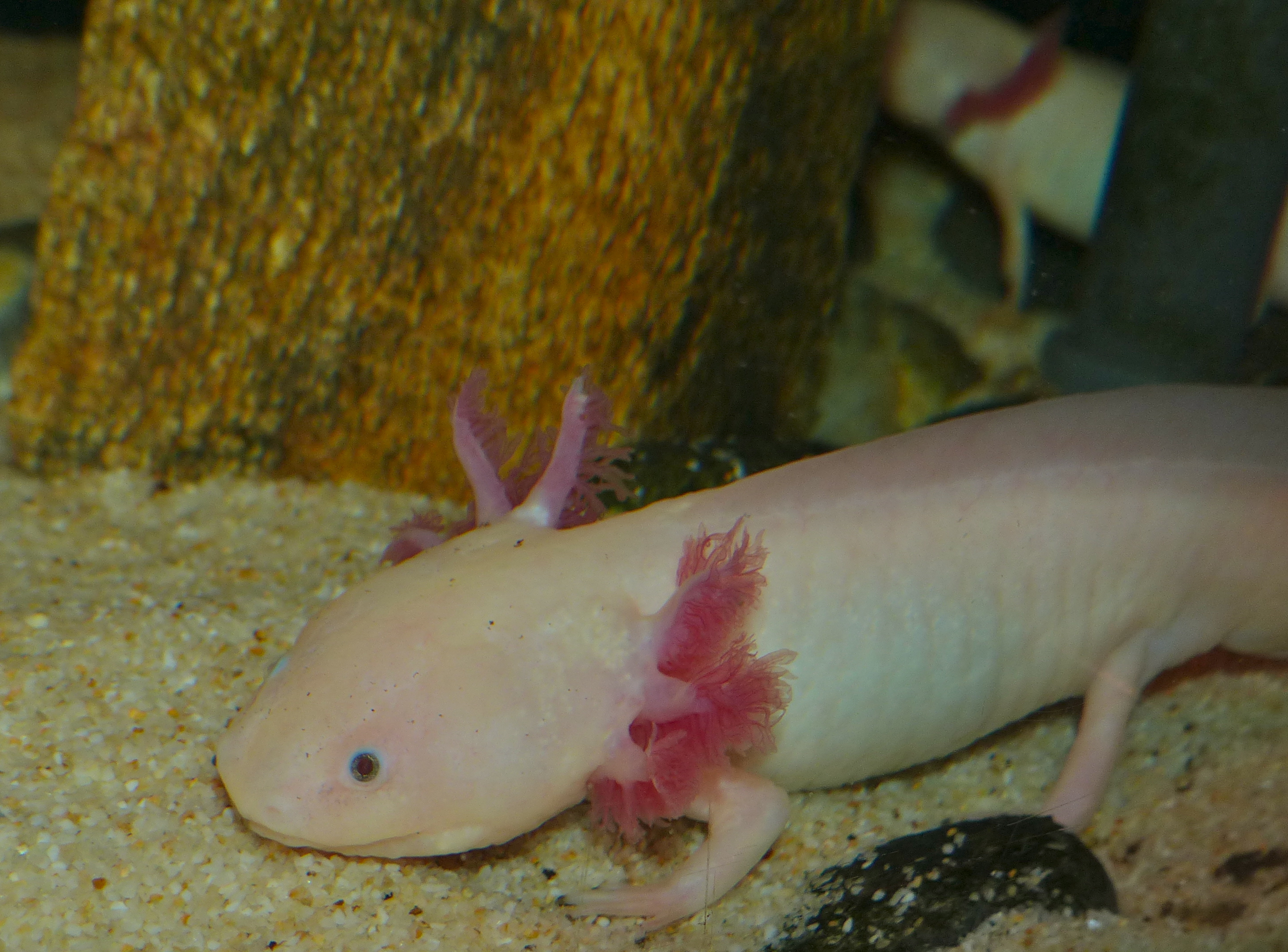
🦎Axolotl
Ambystoma mexicanum
Never grew up, never stops smiling, cannot be permanently damaged. Menace.
- CoolRegeneration: Regrows limbs, heart, and brain with no scar
- WeirdGenome size: About 10x the human genome
- WeirdLife stage: Stays a larva forever, keeps its frilly gills
I have a rule in this house: any two things can be compared, and the more unrelated they are, the more important the comparison. So today I locked a walking fish, a wasp with a war crime for a nursery, a bird that marinates itself in the smell of a forgotten fridge, and a salamander that treats decapitation as a mild inconvenience into one room and asked them to justify their existence on the only three axes that matter: how cool, how weird, and how gross. None of these animals agreed to this. That is the beauty of the format.
The lineup, and why it makes no sense
A fish (Tasmania), a wasp (the American Southwest), a bird (basically all of Eurasia and Africa), and a salamander (one lake in Mexico City). They share no habitat, no diet, and no dignity. Perfect.
Cool
The tarantula hawk runs away with the cool category on raw menace alone. Its sting scores a 4.0 on the Schmidt sting pain index, tied for the very top of the scale with the bullet ant. Justin Schmidt, the entomologist who built the scale by getting stung on purpose for years, described it as "blinding, fierce, shockingly electric," like "a running hair dryer has just been dropped into your bubble bath." The one mercy: the agony only lasts about three to five minutes, which is roughly how long it takes to finish screaming.
The axolotl counters with a superpower that sounds made up. It regrows lost limbs, chunks of its heart, its spinal cord, and significant portions of its brain, and it does all of this without scarring. Lose a leg, grow a leg. It is the closest thing biology has to a save point.
The spotted handfish is cool in the underdog sense: it does not swim so much as walk, scuttling across the seabed of the Derwent estuary on modified pectoral fins that look exactly like little hands. It has no swim bladder, so it mostly just... strolls.
Weird
The handfish is a member of the anglerfish order, so it even has a tiny lure (an illicium) on its snout, but it uses that heritage to be the most low-energy fish alive. It grows to about 12 cm and travels almost nowhere.
The axolotl never grows up. It stays in its larval form for its entire life, keeping those frilly external gills fanned out behind its head like a permanent bad hair day, and it keeps the accidental grin that made it an internet celebrity. Bonus weirdness: its genome is about ten times larger than yours. You are outgunned genetically by a smiling water baby that never finished puberty. You can actually force it to grow up by adding thyroid hormone to its water, but why would you do that to it.
Gross
This is a two-animal cage match, and both entrants are disgusting in ways that will stay with you.
The Eurasian hoopoe: during breeding, the female's preen gland pumps out a thick brown secretion that smells like rotting meat. She rubs it into her feathers and her eggs on purpose, because the antimicrobial chemicals in it are actually manufactured by symbiotic bacteria living in the gland and they help fight off pathogens. And if you get too close to the nest anyway, the chicks turn around, hiss at you like a snake, and fire streams of liquid feces in your general direction. Charming family.
The tarantula hawk: the adult is, honestly, a pacifist. Both sexes sip flower nectar and are important pollinators of milkweed. The horror is entirely in the parenting. The female stings a tarantula into permanent paralysis, drags the still-living spider into a burrow, and lays a single egg on it. The larva hatches, chews a hole into the spider, climbs inside, and eats it alive from the inside out, carefully saving the vital organs for last so the spider stays fresh for as long as possible.
One animal is gross because it smells terrible and its children throw poop. The other is gross because it invented a slow-motion inside-out buffet. These are not the same kind of gross, and I love that the category is big enough for both.
The reckoning
The handfish is too pure and too endangered to lose to; it just cannot win a fight it refuses to swim to. The axolotl is the crowd favorite and the smartest long-term investment. The hoopoe is the grossest by smell. But only one contestant maxes out all three axes at once.
And the winner is...
🐝 Tarantula Hawk
The tarantula hawk wins because it is the only contestant that scores in all three categories without even trying. Cool: a sting tied for the most painful on Earth. Weird: an adult that is a gentle flower-sipping pollinator by day and the parent of a monster by design. Gross: a nursery that is a living, paralyzed tarantula being eaten from the inside out, organs saved for dessert. The axolotl is more lovable and the hoopoe smells worse, but nobody here combines 'state insect of New Mexico' with 'orchestrates the worst death in the desert' quite like this wasp. It is beauty and atrocity in one rust-winged package. Crown it.
You be the judge
Who is your pick?
Vote before you scroll on. No wrong answers (there is one wrong answer).
Questions you're too polite to ask
- Would the tarantula hawk's sting actually kill me?
- Almost certainly not. For humans the sting is described as immediate, excruciating, and short: about three to five minutes of the worst pain of your life, then it fades. The famous advice from entomologist Justin Schmidt is basically to lie down and scream, because you will not be able to do anything useful anyway. The tarantula is the one that should be worried.
- Is it true an axolotl can regrow its brain?
- Yes, at least significant portions of it. Axolotls regenerate limbs, tail, spinal cord, parts of the heart, and sections of the brain, all without scarring, which is why regeneration researchers are obsessed with them. That is also why they are everywhere in labs and pet tanks while being critically endangered in the wild, where only a tiny population survives in the canals of Lake Xochimilco near Mexico City.
- Why does the hoopoe smell so bad on purpose?
- It is chemical warfare, not poor hygiene. The breeding female's preen secretion is loaded with antimicrobial compounds made by symbiotic bacteria in her gland, and smearing that rotting-meat goo on herself and her eggs helps ward off bacteria and parasites. The nestlings also squirt feces at intruders. It works, so who is really the weird one here.
Taxonomy & tags
Where the facts came from
- Spotted Handfish, Brachionichthys hirsutus (Lacepede, 1804) - Australian Museum
- How our scientists are working to save the Spotted Handfish - CSIRO
- Local densities and habitat preference of the critically endangered spotted handfish - PLoS ONE
- Tarantula Hawks of Colorado - Colorado State University Extension
- Meet the Man Who Got Stung for Science - The Nature Conservancy
- Pepsis grossa - Wikipedia
- The Hoopoe: Emissary of Kings, Secreter of Stink - National Audubon Society
- Antimicrobial chemicals in hoopoe preen secretions are produced by symbiotic bacteria - Proceedings of the Royal Society B
- Tiny salamander's huge genome may harbor the secrets of regeneration - Yale News
- Axolotl Fact Sheet: Population and Conservation Status - San Diego Zoo Wildlife Alliance Library
The peanut gallery
0 comments